Demystifying Geometrical Dimensions and Tolerances in Engineering
Geometrical dimensions and tolerances (GD&T) are the backbone of modern engineering and manufacturing. In a world where precision is paramount, GD&T provides a standardized way to communicate design intent, ensuring that components fit together seamlessly and function as intended. This blog aims to demystify the world of geometric dimensions and tolerances, shedding light on their importance and application in the field of engineering.
2023-10-31

A. Understanding Geometrical Dimensions:
Geometrical dimensions refer to the physical characteristics and shapes of an object. In traditional drawings, dimensions were often specified using linear measurements alone. However, geometric dimensions go beyond simple lengths, introducing concepts such as form, profile, orientation, and location. These dimensions enable engineers to convey the complete picture of a component's requirements.
B. The Role of Tolerances:
Tolerances are acceptable variations in dimensions to ensure that parts fit together and function correctly. In engineering, achieving absolute precision is often impractical or cost-prohibitive. Tolerances allow for a reasonable margin of error, ensuring that manufactured parts still meet design specifications.
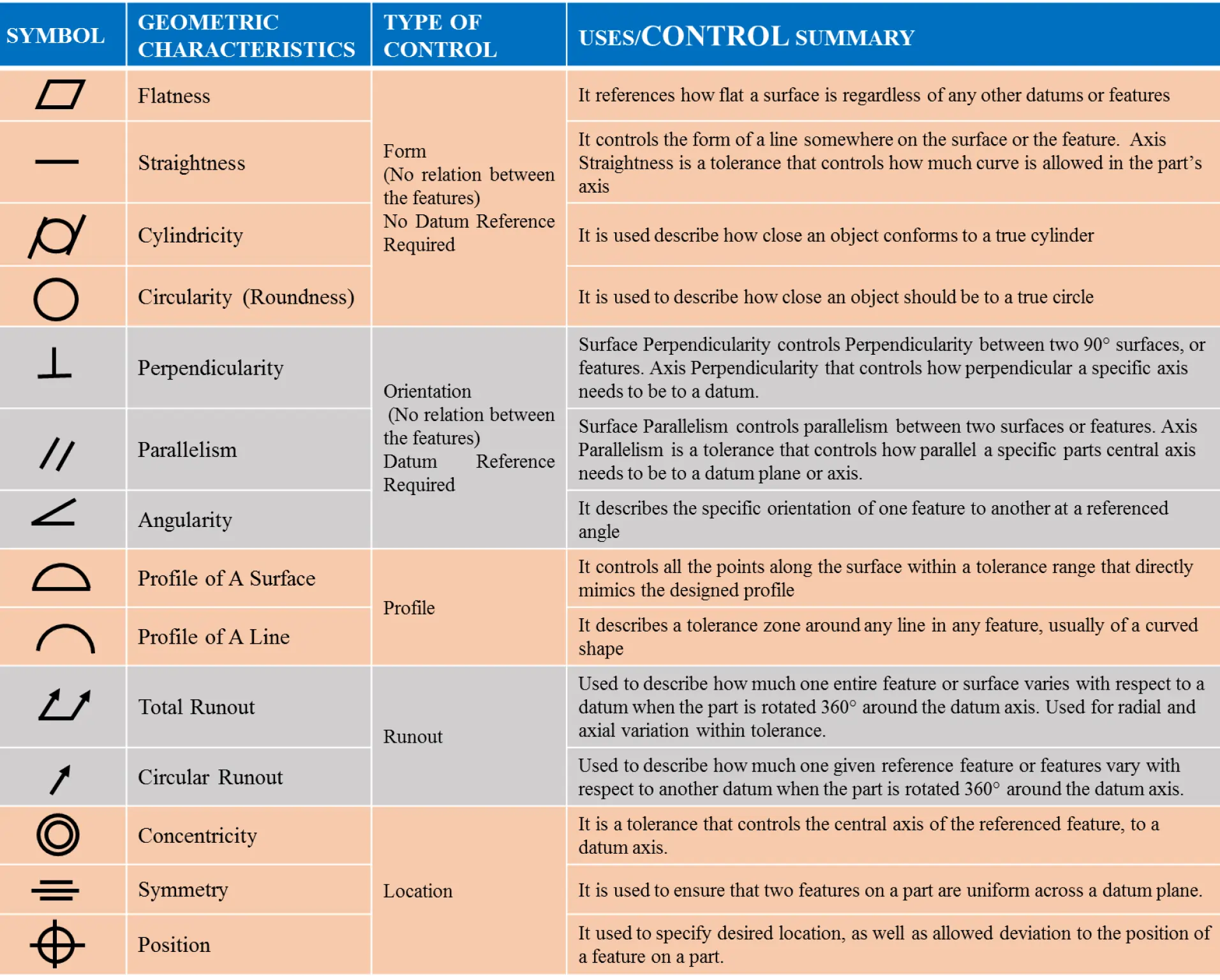
C. Key Components of GD&T:
1. Form: Ensures that a surface or feature is the correct shape. Common symbols include straightness, flatness, circularity, and cylindricity.
2. Profile: Specifies the allowable variations of a surface in terms of a boundary. It ensures that the entire surface conforms to the specified shape.
3. Orientation: Describes the acceptable tilt or angle of a feature. This is crucial in designs where precise alignment is necessary for functionality.
4. Location: Indicates the acceptable position of a feature. Positional tolerancing is critical for components that need to fit together accurately.
5. Runout: Measures the total movement of a feature in relation to a datum. Runout is vital for components that require smooth rotation or movement.
D. Benefits of GD&T:
1. Interchangeability: GD&T facilitates the interchangeability of parts, ensuring that components from different manufacturers can be used together without issues.
2. Clear Communication: Provides a universal language for engineers and manufacturers, reducing the likelihood of misinterpretation in design and production.
3. Cost Savings: By specifying tolerances appropriately, manufacturers can achieve the required precision without over-engineering, leading to cost savings.
4. Improved Quality: GD&T promotes higher-quality products by minimizing variations and ensuring that parts conform to design specifications.
E. Conclusion:
In the intricate world of engineering, where precision is paramount, geometrical dimensions and tolerances play a pivotal role. The adoption of GD&T not only streamlines communication between designers and manufacturers but also contributes to the creation of reliable, cost-effective, and high-quality products. As technology advances, understanding and implementing GD&T principles will continue to be a cornerstone of successful engineering endeavors.
Author

Devendra Saini ( Design Engineer)
Total 4 Blogs viewDesign Engineer working with ISOPARA client location.
Author’s journey so far:
info not found
Course done and recommended by Author:
Share This Page



Other Trending Videos
- 3-Steps || Choose the Right CAD Software with the Right Domain
- Roadmap || Become an Automotive Design Engineer in BIW Domain.
- Roadmap || Become an Automotive Design Engineer in Plastic Domain
- Not Getting Interview CALLS? || Career Guidance
- Mechanical Design Jobs || Domain Skill
- Why CAD and its Importance? || By Experts
- Difference || CAD Engineer Vs Design Engineer
- Best CAD Software to Learn & Build a Career || By Experts
- Best CAD Software to Learn || Most Demanded by Industries
- How to Become a Design Engineer? || By Expert.