Anatomy of a Disc Brake: How the Components Work Together
The disc brake system is a fundamental part of modern vehicles, providing efficient and reliable stopping power. To understand how it works, let's dissect the various components involved in a disc brake assembly and see how they come together to bring your vehicle to a halt.
2023-09-27
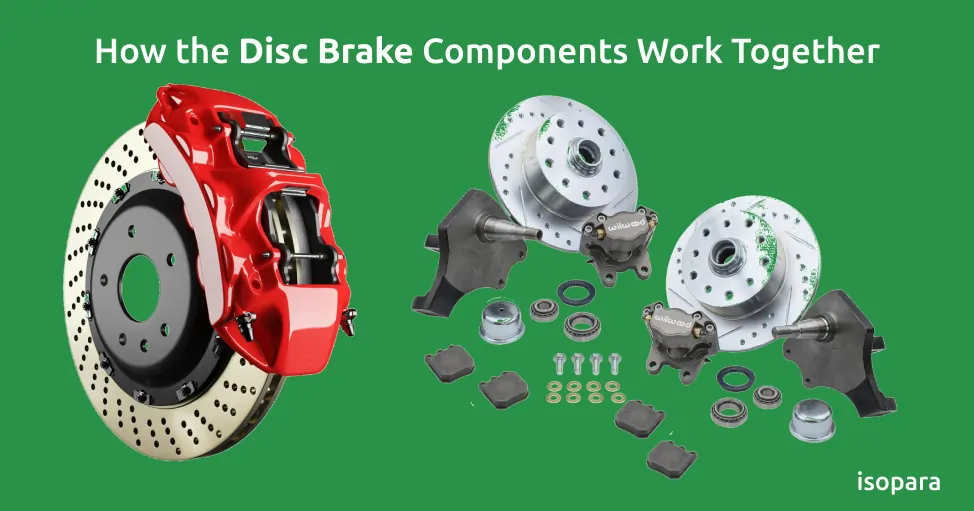
Components of a Disc Brake System
1. Rotor (Brake Disc): The rotor is a flat, circular metal disc attached to the vehicle's wheel hub. It's a critical component that rotates with the wheel.
2. Caliper: The caliper is a hinged, clamp-like structure that houses the brake pads. It's mounted on a bracket and straddles the rotor.
3. Brake Pads: Brake pads are flat, rectangular blocks with friction material (usually made of composite materials like ceramics or metals) on one side. They are held within the caliper and make contact with the rotor.
4. Piston: Inside the caliper, there's a piston or pistons. When hydraulic pressure is applied, the piston(s) push the brake pads against the rotor.
5. Hydraulic System: This includes brake lines, master cylinder, and brake fluid. When you press the brake pedal, hydraulic pressure is generated, transmitted through the brake lines, and used to actuate the brake caliper pistons.
How a Disc Brake Works: Step by Step
1. Brake Application: When you press the brake pedal, you initiate the braking process. This action sends hydraulic pressure through the brake lines to the caliper.
2. Piston Action: The hydraulic pressure forces the caliper piston(s) to move outward. As they extend, they squeeze the brake pads against both sides of the spinning rotor.
3. Friction Generation: The friction material on the brake pads makes contact with the rotor. As the rotor rotates, it gets sandwiched between the stationary pads. The resulting friction creates resistance and slows down the rotation of the rotor.
4. Kinetic Energy Conversion: The kinetic energy of the moving vehicle is converted into thermal energy through friction. This process generates heat and slows down the vehicle.
5. Stopping Power: As the rotor slows down, the vehicle decelerates. When the desired speed or stop is achieved, you release the brake pedal, allowing the caliper piston(s) to retract. This action releases the pressure on the rotor, and the wheel can rotate freely again.
6. Cooling and Recovery: The heat generated during braking dissipates into the air, and the brake system cools down. The rotor, brake pads, and caliper return to their normal state, ready for the next braking event.

Benefits of Disc Brakes:
- Efficient and consistent stopping power.
- Improved heat dissipation, reducing the risk of brake fade.
- Low maintenance and longer lifespan compared to drum brakes.
- Faster response and better performance in various driving conditions.
In summary, the disc brake system is a vital component of modern vehicles, providing reliable and efficient braking performance. Its ability to convert kinetic energy into thermal energy through friction allows for controlled and safe deceleration, ensuring the safety of drivers and passengers on the road. The synergy of its components makes the disc brake a cornerstone of automotive technology.
Author

Naresh Kumar ( Sr. Design Engineer)
Total 4 Blogs viewSr. Design Engineer with 6+ years of experience with plastic trims-Exteriors and Interiors. Working with some big names in the industry, like OEMs and Tier-1 suppliers.
Author’s journey so far:
My journey started after finishing my BTech degree, and I felt lost. People around me suggested that to try competitive exams like GATE, PSUs, and IES. So, I gave it my all for two years, but it didn't feel right for me. I then shifted my focus to government exams, like the Bank PO exam, hoping for a better fit. But even that didn't work out as planned. At this point, I realized that I wanted to do something related to mechanical engineering, my field of study. I discovered the design engineer role, which sounded interesting and had a promising future. I began wondering how I could break into this field. That's when I stumbled upon isopara.com, a place that seemed to hold the key to my future. I read blogs and reviews about Isopara, and I was impressed. So, I decided to take a chance and called their office. Our discussion opened up new possibilities that changed the direction of my life. So, I packed my bags and left my hometown for Pune. I got a joined course at ISOPARA the very next day, in Plastic trims. At first, I didn't know what I was doing, but I followed their instructions to the letter. Every day was a new challenge, but I kept at it, doing assignments and exercises. I was learning the ins and outs of design, from the basics to the advanced stuff, using CATIA. Fast forward six years, and here I am, working with some big names in the industry, like OEMs and Tier-1 suppliers. It's been quite a journey from that phone call to where I am today.
Course done and recommended by Author:
Share This Page



Other Trending Videos
- 3-Steps || Choose the Right CAD Software with the Right Domain
- Roadmap || Become an Automotive Design Engineer in BIW Domain.
- Roadmap || Become an Automotive Design Engineer in Plastic Domain
- Not Getting Interview CALLS? || Career Guidance
- Mechanical Design Jobs || Domain Skill
- Why CAD and its Importance? || By Experts
- Difference || CAD Engineer Vs Design Engineer
- Best CAD Software to Learn & Build a Career || By Experts
- Best CAD Software to Learn || Most Demanded by Industries
- How to Become a Design Engineer? || By Expert.