The Art and Science of Mechanical Design: A Comprehensive Exploration
Mechanical design, often regarded as the marriage between art and engineering, is a discipline that plays a pivotal role in shaping the tangible world around us. From the sleek lines of automobiles to the intricacies of industrial machinery, mechanical design is the backbone of countless innovations that enhance our daily lives. In this comprehensive exploration, we delve into the various facets of mechanical design, uncovering the processes, principles, and importance that define this dynamic field.
2023-10-20

1. The Foundation: Conceptualization and Ideation
At the heart of every mechanical design project lies the spark of an idea. Conceptualization involves envisioning a product or system that either solves a problem or fulfills a need. This phase is marked by brainstorming sessions, creative thinking, and the exploration of possibilities. Engineers and designers collaborate to define the scope of the project, considering factors such as functionality, user experience, and economic viability.
2. Setting the Stage: Specifications and Requirements
With the concept in mind, the next crucial step is to translate abstract ideas into concrete specifications and requirements. Engineers meticulously outline the functionalities the design must deliver, along with any constraints that must be adhered to, such as budget limitations, material considerations, and regulatory requirements. This phase lays the groundwork for the design process, providing a clear roadmap for subsequent stages.
3. Design Planning: A Roadmap to Success
Effective design planning is essential for the seamless execution of a project. Project managers work in tandem with designers to establish timelines, allocate resources, and assess potential risks. A well-thought-out plan not only ensures that the project stays on track but also enables teams to anticipate and address challenges before they arise.
4. CAD: Bringing Designs to Life in the Virtual Realm
Computer-Aided Design (CAD) is the backbone of modern mechanical design. Through the use of sophisticated software tools, designers create detailed 2D and 3D models of the product. CAD not only facilitates precise visualization but also allows for parametric design, enabling easy modifications and iterations. This virtual representation serves as a digital prototype, guiding the design process before any physical components are created.
5. Analysis and Simulation: Ensuring Structural Integrity
Before a design can progress to the manufacturing phase, it undergoes rigorous analysis and simulation. Finite Element Analysis (FEA) is employed to assess the structural integrity of components under various conditions. This step is crucial in identifying potential weak points, optimizing designs for performance, and ensuring that the final product meets safety and quality standards.
6. Material Selection: Choosing the Right Building Blocks
Material selection is a critical aspect of mechanical design. Engineers must consider a myriad of factors, including mechanical properties, thermal conductivity, durability, and cost. Advances in materials science provide designers with an extensive palette, from traditional metals to cutting-edge composites. The right material not only influences the performance of the product but also affects its weight, longevity, and environmental impact.
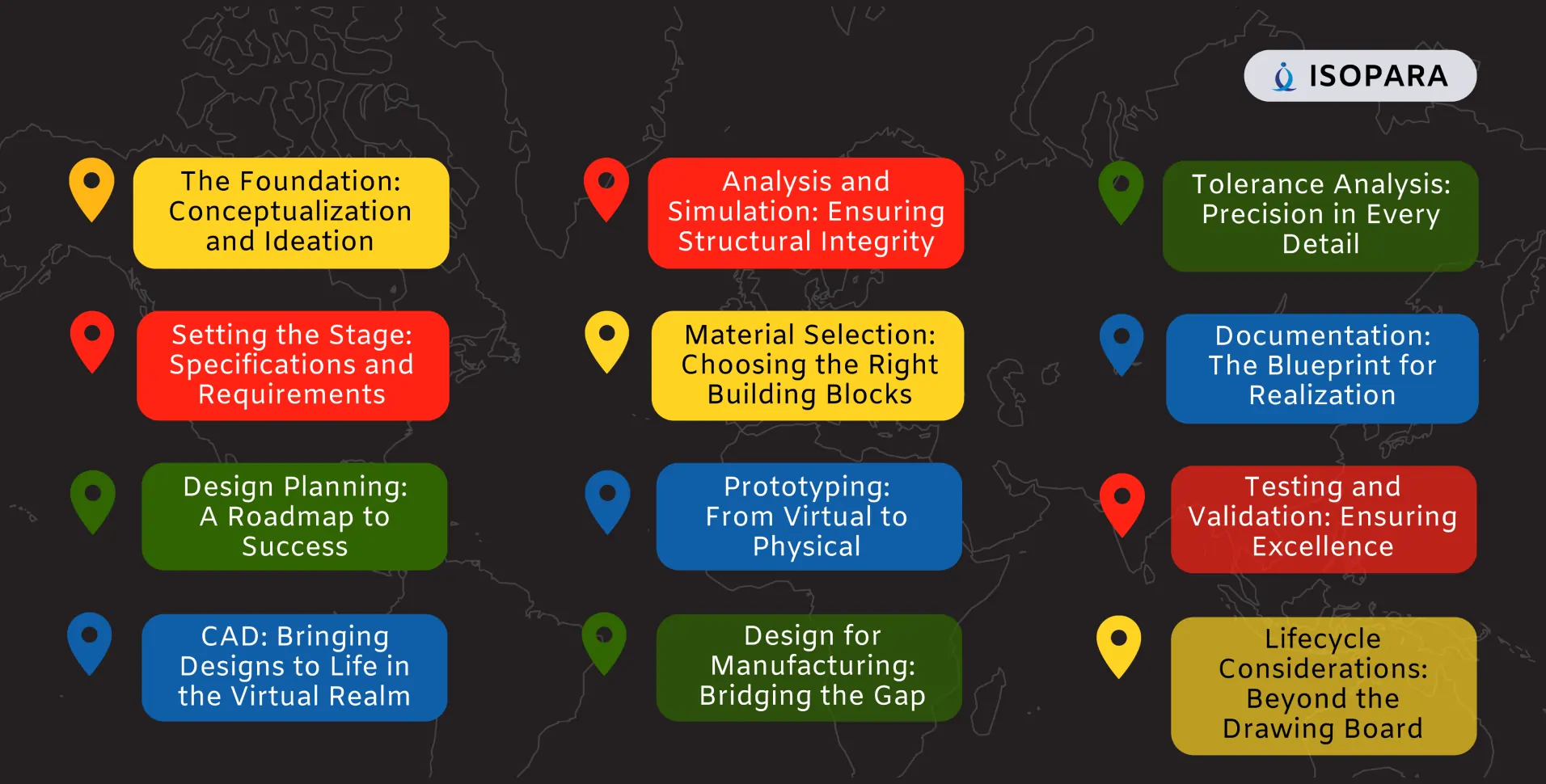
7. Prototyping: From Virtual to Physical
While CAD models offer a high-fidelity representation of a design, physical prototypes are indispensable for testing and validation. Rapid prototyping technologies, such as 3D printing, allow designers to bring their creations into the physical realm quickly. Prototypes serve as tangible proofs of concept, enabling engineers to assess form, fit, and function. Iterative design based on prototyping feedback is a hallmark of successful mechanical design.
8. Design for Manufacturing (DFM): Bridging the Gap
An intricately designed product is only as good as its manufacturability. Design for Manufacturing (DFM) principles guide designers in optimizing their creations for efficient and cost-effective production. Considering factors like ease of assembly, material selection, and production scalability, DFM ensures that the transition from design to manufacturing is seamless.
9. Tolerance Analysis: Precision in Every Detail
In the world of mechanical design, precision is paramount. Tolerance analysis involves determining the allowable deviation in dimensions and clearances to guarantee proper assembly and functionality. This meticulous process ensures that components fit together snugly and function seamlessly within specified tolerances.
10. Documentation: The Blueprint for Realization
Technical documentation is the backbone of any mechanical design project. Detailed drawings, specifications, and assembly instructions provide a comprehensive guide for manufacturers. A well-constructed Bill of Materials (BOM) lists all the materials and components required for production, streamlining the manufacturing process.
11. Testing and Validation: Ensuring Excellence
No mechanical design is complete without thorough testing and validation. Engineers subject the product to a battery of tests to evaluate its performance under various conditions. This phase not only identifies any shortcomings or design flaws but also provides valuable data for refinement.
12. Lifecycle Considerations: Beyond the Drawing Board
Mechanical design extends beyond the creation of a product; it encompasses considerations for its entire lifecycle. Designers must plan for ease of maintenance, repair, and, eventually, disposal. Sustainable design practices aim to minimize environmental impact, promoting responsible practices throughout the product's life.
Hence, we can conclude it as a, “The Ever-Evolving Landscape of Mechanical Design”. Mechanical design is a dynamic and ever-evolving field that combines creativity, engineering prowess, and a commitment to excellence. From the initial spark of an idea to the realization of a tangible product, mechanical designers navigate a multifaceted journey, overcoming challenges and pushing the boundaries of innovation. As technology advances and materials evolve, the landscape of mechanical design continues to expand, offering limitless possibilities for those who dare to imagine and engineer the future.
Author

Pooja G ( HR - isopara)
Total 13 Blogs viewMeet Pooja, the warm-hearted soul at ISOPARA, juggling roles as a friendly HR person and a helpful counselor.
Author’s journey so far:
About HR Pooja - Pooja isn't just someone managing things; she's like a supportive friend helping you navigate your career path. She's heard stories from recent grads searching for their way and from experienced individuals wanting a fresh start. What makes Pooja unique is her genuine interest in the lives of the people she meets and the constant support from Prashant sir adds an extra layer of encouragement. Her blogs are like a collage of successes and challenges, telling the stories of learners who dared to make a change. Through these stories, Pooja shares the highs of landing the dream job, the strength to face tough times, and the pure joy of finding what you love doing. Having been a learner, Pooja knows how education can change your life. Her own experiences, along with the ever-present support of Prashant sir, shine through in her talks, creating a positive atmosphere for those about to start their own learning adventure. Pooja, with Prashant sir by her side, isn't just an HR and counselor; they're a dynamic duo, guiding everyone at ISOPARA toward success
Course done and recommended by Author:
Share This Page



Other Trending Videos
- 3-Steps || Choose the Right CAD Software with the Right Domain
- Roadmap || Become an Automotive Design Engineer in BIW Domain.
- Roadmap || Become an Automotive Design Engineer in Plastic Domain
- Not Getting Interview CALLS? || Career Guidance
- Mechanical Design Jobs || Domain Skill
- Why CAD and its Importance? || By Experts
- Difference || CAD Engineer Vs Design Engineer
- Best CAD Software to Learn & Build a Career || By Experts
- Best CAD Software to Learn || Most Demanded by Industries
- How to Become a Design Engineer? || By Expert.